
One of the most important foundations of Pécs’s economic strength is that the city is simultaneously a historic center, a university town, a cultural hub, and a tourist destination. These attributes are valuable in and of themselves, but their true economic impact is realized when cultural heritage, gastronomy, hospitality, local products, and tourism services come together to form a mutually reinforcing offering.
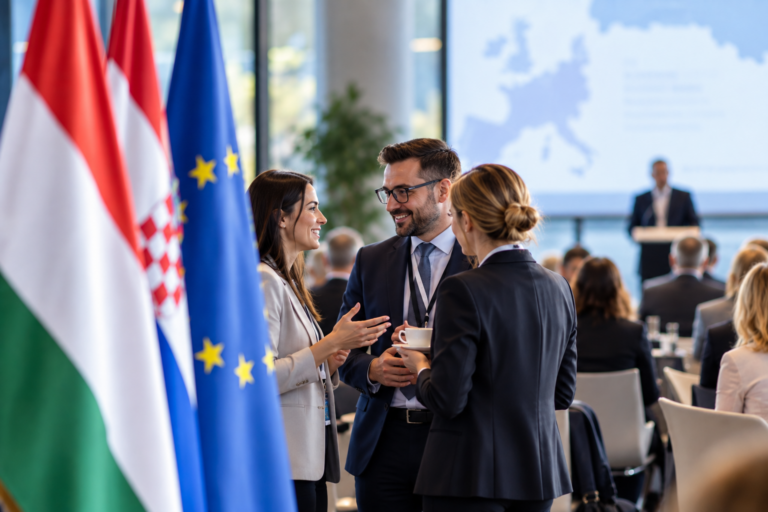
This approach is further reinforced by the international cultural and tourism cooperation launched in Pécs as part of the Interreg Europe EnoGastroDEST project, with the involvement of the Janus Pannonius Museum. As a partner in the project, the Chamber of Commerce and Industry of Pécs-Baranya is working to ensure that the preservation of wine and gastronomic heritage, as well as the development of experience-based, sustainable tourism, creates tangible opportunities for businesses in the region.
One of the key venues for the international partner meeting organized by the Chamber was the Janus Pannonius Museum, where participants were able to gain firsthand insight into the museum’s professional work showcasing local history, wine culture, and regional identity. As a result of the meeting, the museum was able to join the Iter Vitis—the Council of Europe’s Cultural Routes network—as an honorary member, a network dedicated to preserving and showcasing Europe’s heritage of grape and wine culture.
Today, cultural tourism means much more than simply viewing an exhibition or a historic monument. Visitors seek experiences, stories, local character, and related services. A well-structured cultural and gastronomic offering has a direct impact on the hospitality industry, accommodations, local producers, city programs, and players in the creative industries.
Pécs has particularly strong foundations in this regard. The city’s historical heritage, museum network, Mediterranean atmosphere, university environment, and cultural program offerings together provide a foundation upon which a tourism product can be built even on an international level. The Janus Pannonius Museum plays a significant role because the institution not only functions as an exhibition space but also takes an active role in preserving and showcasing local identity and cultural heritage.
The museum’s current and planned professional programs—including the Genius Loci exhibition, exhibition concepts related to Pécs’s “tüke” identity, and thematic developments based on grape and wine culture—can provide a foundation of content upon which local businesses in tourism, hospitality, winemaking, and the creative industries can build. These elements can help provide visitors with more complex and authentic experiences, while opening up new opportunities for collaboration among local service providers.
The Chamber’s Enterprise Europe Network (EEN) office also played a key role in establishing and developing international relationships, supporting the process through consulting, networking, and facilitating international collaborations. The EEN also contributed to the discussions with the Iter Vitis network, helping the museum to engage with the work of the international professional community in line with the available opportunities.
The resulting collaboration extends beyond institutional ties. The international exchange of professional expertise, the sharing of best practices, and the potential for new project partnerships can contribute to the region’s tourism and economic development in the long term. This is particularly important at a time when cities and regions are increasingly able to compete in the tourism sector through themed experiences, high-quality services, and authentic local stories.
From an economic perspective, one of the project’s greatest values is its potential to foster the development of tangible tourism products, itineraries, program packages, and business partnerships. Cultural heritage becomes a true economic resource when visitors not only view a site but also spend more time in the city, use local services, purchase local products, and leave with experiences that encourage them to return in the future.
The EnoGastroDEST project is a good example of how the results of international collaborations and projects can be leveraged to develop the local economy. The coordinated development of cultural tourism, gastronomy, wine region connections, and the creative economy can create a regional offering that makes Pécs and Baranya more attractive not only to visitors but also to investors and service providers.
Source: Chamber of Commerce and Industry of Pécs-Baranya