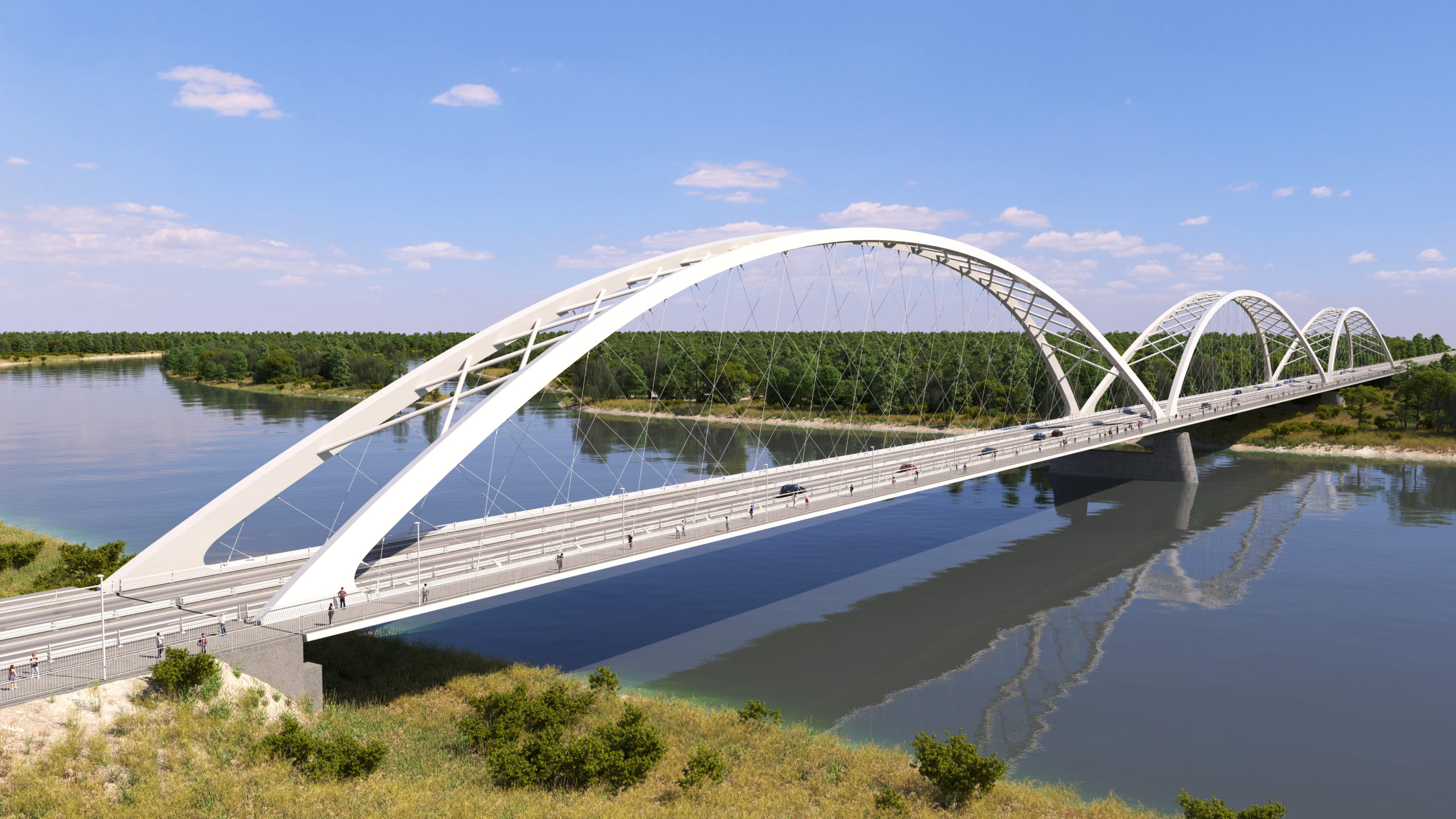

Baranya County is one of Central Europe’s most versatile destinations, yet it remains cost-competitive. The Danube bridge currently under construction in Mohács will open up the region’s logistics network to the Croatian and Balkan markets; the University of Pécs (≈25,000 students, 10 faculties) ensures a steady supply of talent; and renewable energy (PV, geothermal, waste heat) delivers tangible operational savings. Below, we briefly outline what an investment here entails.
1) Market access and logistics: three countries, two hours
Budapest is about 2–2.5 hours away from the center of Baranya, Osijek is about 1 hour away, while Zagreb is approximately 240 km away. Its location along the Danube and the Mohács Danube Bridge (currently under construction) connect north–south and east–west transport routes. In practice, this enables 24–48-hour delivery within Central Europe, as well as the integration of border-near customs and warehousing services.
Rail connections
- Budapest–Pécs main line (via Dombóvár): regular passenger and freight traffic; industrial rail connections can be established at brownfield and greenfield sites. The Dombóvár junction connects the county to the national network.
- The Villány–Magyarbóly–(HR) Beli Manastir/Osijek corridor: a cross-border rail link suitable for both logistics and agricultural export/import traffic.
- Intermodal potential near Mohács: road–rail–waterway combinations; in the medium term, container and refrigerated transport routes can be developed.
Road connections
- M6/M60 Expressway Corridor: A continuous expressway connection from Budapest to Pécs, with a junction at Bóly. The corridor ensures access to the capital within 2–2.5 hours and supports northbound supply chains.
- Regional connections: Pécs–Mohács ≈45 km (≈50 minutes), Pécs–Szigetvár ≈34 km (≈35 minutes), Pécs–Villány ≈35 km (≈40 minutes). The opening of the Danube Bridge in Mohács will save even more time when traveling toward the Croatian A5/A10.
- Freight transport: industrial access roads designed for standard vehicles with a gross weight of 40 tons; B-BUS turning areas can be constructed at multiple industrial sites, with 24/7 access.
Air service
- Pécs–Pogány Airport (IATA: PEV): suitable for regional, business, and charter traffic; fast VIP and cargo handling, flexible slots—for the rapid transport of executives and high-value cargo.
- International hubs: Budapest (BUD) approx. ≈200–235 km, Zagreb (ZAG) ≈240 km, Osijek (OSI) ≈60–70 km from Mohács. Together, these provide a daily network of intercontinental connections.
2) Cost advantage + energy coverage
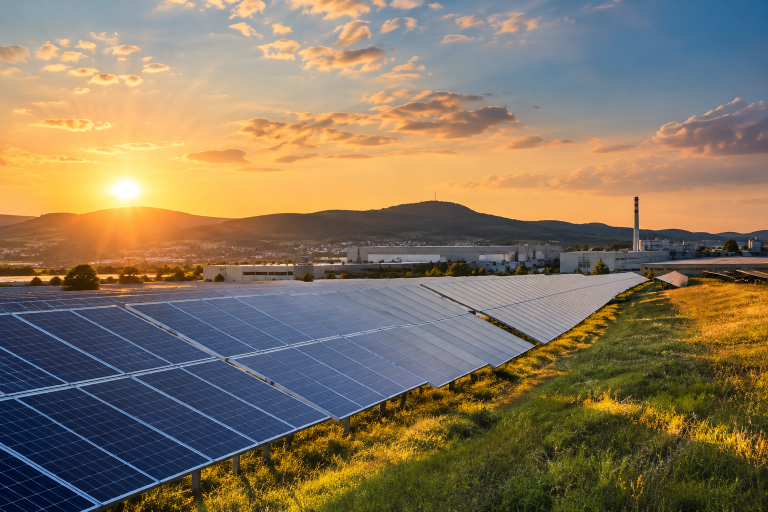
The county offers a competitive environment in terms of labor and land costs, while rooftop PV combined with energy storage is easily scalable in industrial parks (up to 10–15 MWp at the park level). Pécs and its surrounding area are also suitable for geothermal or waste heat integration; for industrial facilities, this can result in a 30–40% reduction in CO₂ emissions and a payback period of 5–7 years with subsidized financing.
3) Talent and Youth Development: University of Pécs
With approximately 25,000 students and 10 faculties, the University of Pécs provides a steady supply of graduates in engineering, computer science, life sciences, and business. Dual and modular training programs in collaboration with companies can be launched in 6–12 weeks (e.g., PLC, robotics, maintenance planning, pharmaceutical quality assurance). Thanks to the international student community, multilingual customer support and engineering services can also be easily organized.
4) Workforce and vocational training – what does an investment get here?
The labor market in Baranya County is well-balanced: in addition to the supply of graduates from the University of Pécs, there is a stable pool of skilled technicians and trainees from the county’s vocational training institutions. For companies, this means two things: a short onboarding period and predictable ramp-up.
Available job profiles (examples)
- Machinery / Automotive Industry: CNC machine operator, lathe and milling machine operator, welder, metalworker, maintenance technician, industrial electrician.
- Electronics / Assembly: electronics technician, cable and connector assembler, SMT operator, quality control inspector.
- Logistics / Warehouse: warehouse worker, order picker, forklift operator, shift supervisor, freight coordinator.
- Food industry: food processing machine operator, cold storage and packaging operator, HACCP/IFS/BRC quality inspector.
- Medtech/life sciences support staff: cleanroom assembler, laboratory assistant, validation technician.
- IT and Office Equipment: help desk and system administrator, test assistant, entry-level automation/PLC operator.
Vocational training pathways and partnerships
- Dual technician training: joint workshop and on-the-job training with the county’s vocational training institutions; company-specific curriculum modules can be incorporated.
- Short, focused corporate modules (6–12 weeks): PLC basics, robotics, maintenance planning, logistics systems, and fundamentals of quality management. These modules can be integrated into the trial production/preparation timeline.
- Adult education and upskilling: welding certification renewal, CNC retraining, forklift operator training, EHS, and workplace conduct.
- University-industry partnerships: engineering student projects, cooperative theses, part-time entry-level positions—as an internal talent pipeline.
5) Industries that stand to benefit the most
- Logistics and e-commerce fulfillment (24–48-hour CE delivery)
- Supplies for the electronics and automotive industries (precision metal, plastic, wiring)
- Medtech and life sciences accessories (assembly, validation, packaging)
- Food processing (cold chain, export packaging, IFS/BRC)
- Circular economy (recycling, industrial water treatment, ESG parks)
6) Investor Services – One-Stop Support
- Land and real estate portfolio, organizing site visits
- Partner and Supplier Map, Border Logistics Solutions
- Grant consulting (investment, R&D, training), financing structure
- Recruitment and training coordination with the University of Pécs and vocational training programs
- Project Management Throughout the Entire Installation Cycle